Horror story videos don't need a camera, a set, or a single special effect — just a voice, a dark screen, and a story that won't let go. That's what makes the format so cheap to produce and so easy to binge. Gen Z already over-indexes on horror: 91% watch horror movies or shows, the highest share of any generation surveyed (Statista, 2025).
You don't need to appear on camera, film a single frame, or own a horror-movie budget. The format is script-in, video-out. This guide covers why scary stories hold attention so well, which subgenres perform best, how to structure one for maximum tension, and how to generate a full batch with AI in minutes.
Key Takeaways
- 91% of Gen Z watches horror movies or TV shows, more than any other generation surveyed (Statista, 2025).
- Horror captured 12.1% of US domestic box-office ticket sales in 2025, up from 9.8% in 2024, per data from The Numbers (Sherwood News, 2025) — genre demand is climbing, not fading.
- The TikTok hashtag "Horror Text Stories" has racked up 8.4 million posts (TikTok, 2026), confirming narrated text-message horror is an established, high-volume category rather than a niche experiment.
- The strongest subgenres are creepypasta/urban legends, real paranormal encounters, and text-message/found-footage style stories — all built around unresolved tension rather than jump-scares.
- AI tools like ShortOpus generate the script, voiceover, visuals, and captions in one pass, with a script review step before rendering.
Why Does Scary Content Hold Attention So Well?
Horror content already skews toward the exact audience short-form platforms are built for: 91% of Gen Z watches horror movies or shows, well ahead of every older generation surveyed (Statista, 2025). That appetite isn't fading. Horror took 12.1% of US domestic box-office ticket sales in 2025, up from 9.8% the year before, per data from The Numbers (Sherwood News, 2025) — even as the genre gets zero marketing budget on a phone screen.
The mechanic behind why a scary story keeps someone watching isn't mysterious. It's a century-old finding in psychology. The Zeigarnik effect shows people remember and stay engaged with unfinished tasks far more than completed ones (Bluma Zeigarnik, 1927). A horror story that opens mid-scene and withholds the explanation is, structurally, an unfinished task the brain won't let go of until it resolves.
This is also why horror survives rewatching differently than most narrative formats. A joke or a plot twist loses its punch once you know the ending. A well-built horror story keeps a low hum of dread even on a rewatch, because the tension lives in the pacing and the voice, not purely in not-knowing what happens next — closer to how a good campfire story works regardless of how many times you've heard it.
Citation Capsule: Gen Z watches horror content more than any other generation, at 91% (Statista, 2025), and the genre's US box-office share grew from 9.8% to 12.1% in a single year (Sherwood News, 2025). A scary story video is aimed at an audience whose appetite is measurably growing, not shrinking.
For channel-level context on which faceless formats convert into an audience, see our breakdown of faceless YouTube channel ideas.
Which Scary Subgenres Work Best for Faceless Video?
The subgenres that hold up best on a phone screen are the ones built entirely around narration and pacing — no jump-scares, no visual effects, just a voice and the right pause at the right moment.
Creepypasta and urban legends are the backbone of the format, because they're written to be retold rather than filmed. Examples: "The Backrooms," "The Rake," or any local "don't go there after dark" legend rewritten for a new audience. TikTok's "Horror Text Stories" hashtag alone has 8.4 million posts, confirming this isn't a niche corner of the platform.
Real paranormal encounter stories ("this actually happened to me") work because the first-person framing removes the audience's usual skepticism filter. A story framed as someone's Reddit post or a caller's account reads as testimony, not fiction, which raises the stakes on every claim.
Text-message and found-footage style horror delivers the story as screenshots or a recovered recording rather than straight narration, which fits a phone screen naturally — the audience is already reading texts all day, so the format feels native instead of staged.
Unsolved mysteries and disappearances borrow real-world stakes without needing a supernatural element at all — the horror is that nobody knows what happened, which is its own unresolved loop.
Psychological horror ("the horror was there the whole time") relies on a twist that recontextualizes everything the listener just heard, rewarding close attention rather than jump-scare reflexes.
Mixing subgenres inside a channel matters as much as picking a strong one. A channel that alternates creepypasta, real-encounter stories, and unsolved mysteries keeps a wider range of viewers than one that only posts a single subgenre — where anyone who's exhausted that specific flavor of horror drops off the account entirely instead of just skipping one video.
For a wider list of formats that work without showing your face, our guide to creating faceless videos with AI covers the production side in more depth.
How Long Should a Horror Story Video Be?
The same length trade-off that governs every short-form format applies here: 0-30 second videos post the highest TikTok engagement rate at 6.00%, while 120-180 second videos average 5.50% (Social Insider, 2026) — a smaller gap than some formats, but horror's need for a build-up still tends to favor the longer end of that range.
Single-scene stories posted at volume — several per day, testing which subgenre resonates — work well under 60 seconds: a cold open, one escalating beat, and a cut on the scariest line. This is the format most fast-growing horror accounts lean on, since a tight loop is what makes daily posting sustainable.
A video meant to maximize total watch time should run 2-4 minutes with a full story arc: setup, escalation, and a twist or resolution. Horror specifically rewards this longer format more than most niches, because the dread has to build across multiple beats — cutting a scary story short before the payoff reads as an unfinished joke instead of a satisfying scare.
How Do You Structure a Horror Story for Maximum Tension?
Every horror story needs the same four beats regardless of length: a cold open that drops the listener mid-scene with no context, a slow reveal of what's actually wrong, an escalation that raises the stakes past what felt survivable, and a final beat that either resolves or deliberately doesn't. Withholding the "why" for as long as possible is what turns a spooky premise into something the audience can't stop listening to.
Open in the middle of the action, not with backstory. The first 2-3 seconds decide whether someone keeps watching, and "let me tell you about the time..." reads as a wind-up compared to dropping straight into the moment something felt wrong. Save any necessary context for a quick aside once the hook has already landed.
Use silence and pacing as a tool, not just words. A pause before the reveal line does more work than another sentence of description. The Zeigarnik effect is essentially a formal name for the discomfort of an unresolved beat, and a well-placed pause is what makes that discomfort felt in real time instead of just described.
End with a direct prompt: "Would this have scared you? Comment below." Horror videos with an explicit engagement prompt consistently out-comment ones that just cut to black, since a viewer who's still spooked needs a small nudge to say so instead of just closing the app.
How Do You Make Horror Story Videos with AI?
Writing a tight horror script with real pacing, recording an unsettling voiceover, and syncing visuals and captions to the tension takes 30-45 minutes per video by hand — a real bottleneck at the daily posting cadence this format rewards, and a bigger one if the script needs to actually build dread instead of just stating a premise. An AI video generator collapses that into a single pass: you give it a topic, and it writes the story, generates the voiceover, and builds captions and visuals automatically.
ShortOpus's Short Narration Standard format includes dedicated Horror Stories and Urban Legends categories built for exactly this. The workflow:
- Pick a category or describe your own idea. Choose Horror Stories or Urban Legends from the suggestions, or enter a custom premise if you want a narrower angle — a specific setting, a text-message framing, or a real-encounter style.
- Review the script before rendering. The tool shows you the full script and generated voiceover text first, so you can tighten a weak beat or adjust the pacing before any video is generated.
- Choose a voice and visual style. Pick an AI voice that fits the tone — calm and unsettling reads differently than tense and urgent — and a visual template built for narration.
- Generate and export. The tool renders the full video with captions, pacing, and transitions built in, ready to post in 9:16 for TikTok, Reels, or Shorts.
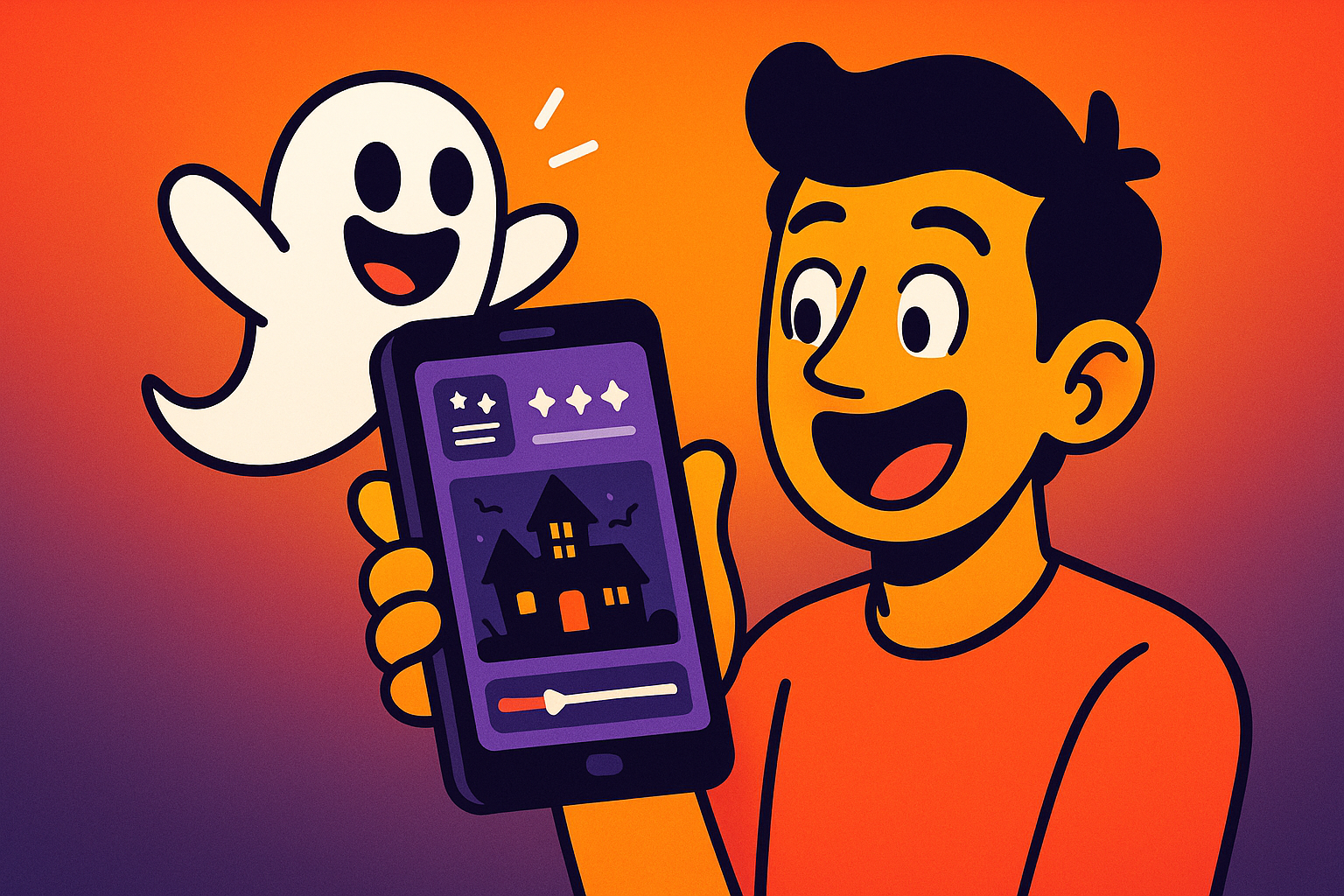
Once you have a working format, the same pipeline applies to other faceless niches beyond horror. Our comparison of AI faceless video generators covers how these tools stack up if you're producing across multiple formats.
What Common Mistakes Kill a Scary Story's Momentum?
Explaining too early. A story that reveals what's actually going on in the first 10 seconds gives away the exact tension it needs to hold for a full minute. Withhold the explanation as long as the story can bear it — the reveal is the payoff, not a footnote.
No subgenre variety within a channel. An account that only posts one flavor of horror plateaus once it exhausts that specific audience's appetite. Rotating between creepypasta, real-encounter stories, and unsolved mysteries, even within the same week, keeps the channel discoverable to new audience segments.
Skipping the pause. A story read at a flat, constant pace with no beat before the scary line reads as a news report, not a scare — it doesn't land, and it doesn't get shared. A single well-placed pause is often the difference between a story that gets scrolled past and one that gets sent to a friend at midnight.
Jump-scare visuals with no narrative build. A loud sound effect or flashing image with no story behind it might spike a reaction once, but it doesn't hold attention the way dread does, and it doesn't survive a rewatch. The tension has to live in the story, not a startle effect layered on top of it.
For the broader system of publishing consistently across a faceless account, see our faceless YouTube automation guide.
Frequently Asked Questions
What makes a good horror story for video content?
A good horror story withholds its explanation as long as possible and escalates in clear beats rather than front-loading the scare. Stories framed as first-person testimony ("this happened to me") tend to outperform third-person fiction, since the framing removes the audience's usual skepticism filter.
How long should a horror story video be?
For single-scene stories posted at volume, stay under 60 seconds with a cold open and one escalating beat. For a longer-form post meant to build real tension, run 2-4 minutes with a full arc — horror specifically rewards a slower build more than most formats, since the dread has to escalate across multiple beats to land.
Do horror story videos still work in 2026?
Yes. 91% of Gen Z watches horror content, more than any other generation (Statista, 2025), and horror's US box-office share grew from 9.8% to 12.1% between 2024 and 2025, per data from The Numbers (Sherwood News, 2025). Demand for the genre is rising, not fading.
Can I make horror story videos without filming myself?
Yes, that's the core appeal of the format. Most successful horror accounts use narrated text or voiceover with minimal visuals rather than a face on camera or practical effects. AI video generators like ShortOpus write the story, generate the voiceover, and build captions and visuals automatically.
What horror subgenres work best for a new channel?
Creepypasta, urban legends, real paranormal encounters, and unsolved mysteries each have deep source material and don't require any visual effects budget. For more on which faceless niches build into a sustainable channel, see our top faceless YouTube niches by earnings.
What to Do Next
Horror story videos work because unresolved tension does the retention work for you — a well-paced story keeps people listening until the payoff, without needing a face, a set, or a single visual effect. The subgenres that perform are the ones built around narration itself: creepypasta, urban legends, real-encounter stories, and unsolved mysteries.
Structure matters as much as the story itself. Open mid-scene, withhold the explanation, escalate in clear beats, and let a pause do the work a jump-scare can't. Whether you post short single-scene stories daily or build toward a longer arc depends on whether you're optimizing for posting volume or total watch time.
An AI workflow removes the writing and production bottleneck entirely — pick a category, review the script for pacing, and export a ready-to-post video in minutes instead of the 30-45 minutes manual production takes per video.