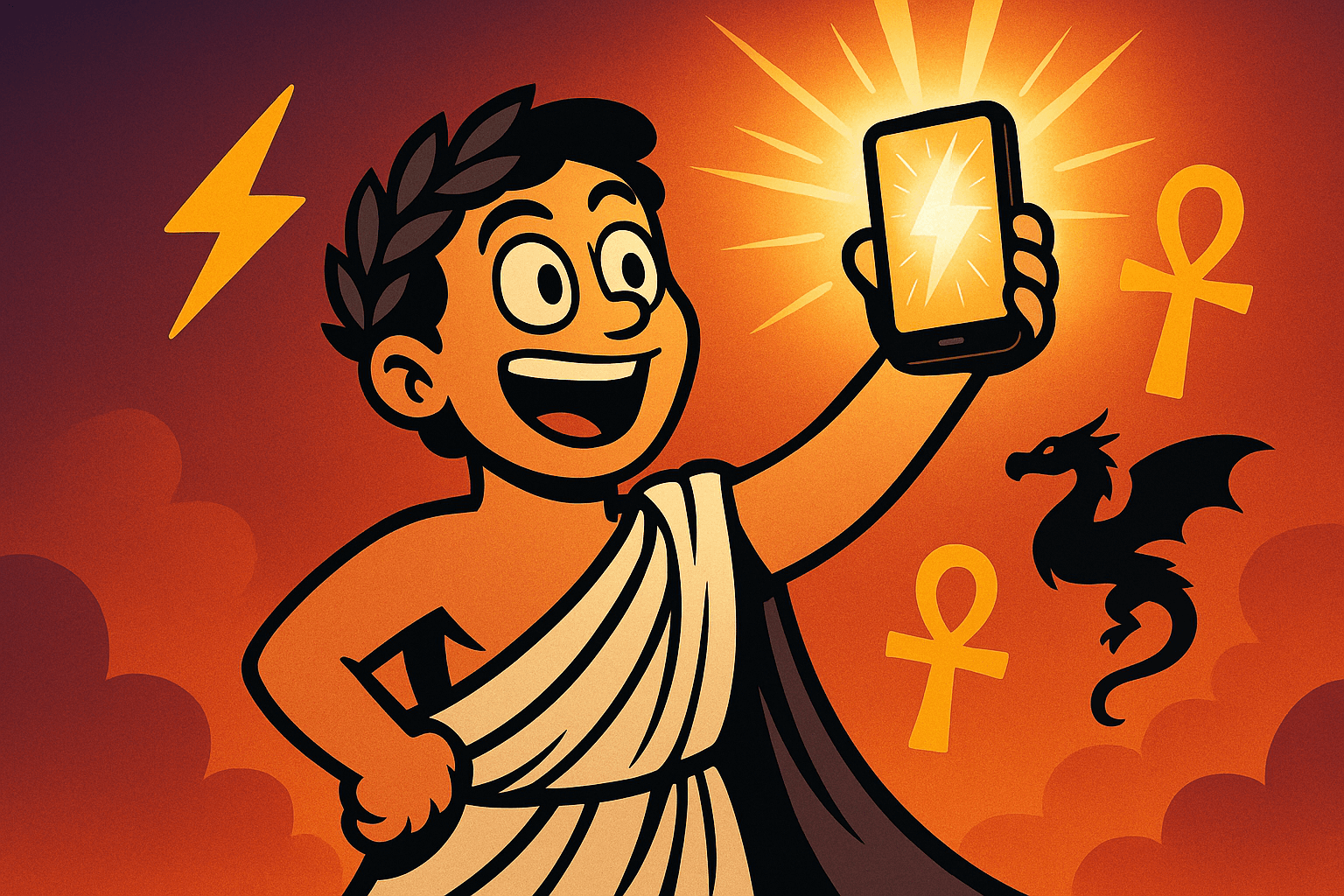
Mythological tales videos turn thousands of years of storytelling into a script-in, video-out format — no camera, no set, no visual-effects budget, just a voice retelling a myth that's already survived every retelling before it. Fantasy became Gen Z's single favorite on-screen genre in 2024, at 36.2%, up 56% from the year before (UCLA Center for Scholars & Storytellers, 2024) — the exact audience short-form platforms are built for.
You don't need to appear on camera, research a full course on world mythology, or write anything from scratch. The format is myth-in, video-out. This guide covers why these stories still hold attention after thousands of years, which traditions perform best, how to structure one for maximum impact, and how to generate a full batch with AI in minutes.
Key Takeaways
- Fantasy was Gen Z's #1 favorite genre on screen in 2024 at 36.2%, a 56% jump year over year, per a survey of 1,644 people ages 10-24 (UCLA Center for Scholars & Storytellers, 2024).
- 15-30 second TikTok videos post the highest engagement rate at 6.00%, while 120-180 second videos average 5.50% (Social Insider, 2026) — the same length trade-off every narration-based format has to plan around.
- The strongest traditions are Greek, Norse, Egyptian, and Asian mythology, each with a deep bench of gods, heroes, and monsters most viewers already half-recognize.
- The "Hero's Journey" structure — the same narrative pattern researcher Joseph Campbell found across nearly every culture's myths — is the built-in template for pacing a myth video (Joseph Campbell Foundation).
- AI tools like ShortOpus generate the story, voiceover, visuals, and captions in one pass, with a script review step before rendering.
Why Does Mythological Storytelling Hold Attention So Well?
Fantasy and myth-adjacent narrative aren't a niche taste — they're the preference of the exact audience short-form video is built for. Fantasy ranked as the #1 favorite on-screen genre among Gen Z and teens in 2024 at 36.2%, a 56% increase from the prior year, based on a survey of 1,644 people ages 10-24 weighted to US Census demographics (UCLA Center for Scholars & Storytellers, 2024).
The reason myths specifically hold up better than most invented fiction is structural, not just thematic. Mid-20th-century researcher Joseph Campbell studied hero narratives across cultures with no contact with one another — Greek, Norse, Egyptian, Mesoamerican — and found the same underlying pattern in nearly all of them: a call to adventure, escalating trials, and a transformation that changes the hero permanently (Joseph Campbell Foundation). That pattern isn't a coincidence of storytelling fashion; it's closer to a template the human brain already expects a satisfying story to follow.
This is also why myth retellings survive a rewatch better than most short-form fiction. A viewer already half-knows how the story of Hercules or Thor ends, so the tension isn't "what happens" — it's "how does this version tell it." That shifts the entire viewing experience from suspense to craft appreciation, which is a much more durable reason to keep watching a creator's account than any single twist ending could be.
Citation Capsule: Fantasy became Gen Z's #1 favorite genre in 2024, jumping 56% in a single year to 36.2% (UCLA Center for Scholars & Storytellers, 2024). Mythological tales sit squarely inside that appetite, and they come with a built-in narrative template — the Hero's Journey — that's already been tested across thousands of years of retelling.
For channel-level context on which faceless formats convert into an audience, see our breakdown of faceless YouTube channel ideas.
Which Mythological Traditions Work Best for Faceless Video?
The traditions that perform best on a phone screen are the ones with the deepest bench of characters most viewers already half-recognize, so a video doesn't need to spend its first ten seconds on setup.
Greek mythology is the default entry point for a reason — Zeus, Hercules, Medusa, and the Trojan War are cultural shorthand even for viewers who've never read a myth cover to cover. Examples: "The 12 Labors of Hercules," "Why Medusa Was Cursed," or "The Real Story Behind the Trojan Horse."
Norse mythology brings a darker, more fatalistic tone that pairs well with an epic voiceover style — Odin, Thor, Loki, and Ragnarök all carry built-in stakes. Examples: "Loki's Ultimate Betrayal," "Why Odin Sacrificed His Eye," or "The Day the Norse Gods Die."
Egyptian mythology offers a visually distinct pantheon — Ra, Anubis, Osiris, and the afterlife mythos — that stands out in a feed dominated by Greek and Norse content. Examples: "The Weighing of the Heart Ceremony" or "How Osiris Became Ruler of the Dead."
Asian mythology (Chinese, Japanese, Hindu) covers dragons, Buddhist and Hindu deities, and samurai-era legends, and it's dramatically underrepresented relative to how large the audience for it actually is. Examples: "The Nine-Tailed Fox Legend" or "Why Hindu Gods Have Multiple Arms."
Celtic, Aztec, Mesopotamian, and African mythology round out a channel with material almost no other creator is covering, which is a discoverability advantage even though the audience already familiar with these traditions is smaller.
Mixing traditions inside a channel matters as much as picking one strong pantheon. A channel that alternates Greek, Norse, and Egyptian myths keeps a wider audience than one that only posts Greek content, where viewers who've already seen the well-known Hercules and Medusa stories retold a dozen times elsewhere start skipping the account entirely instead of just skipping one video.
For a wider list of formats that work without showing your face, our guide to creating faceless videos with AI covers the production side in more depth.
How Long Should a Mythological Tale Video Be?
The same length trade-off that governs every narration-based format applies here: 15-30 second TikToks post the highest engagement rate in 2026 at 6.00%, while 120-180 second videos average 5.50% (Social Insider, 2026) — a smaller gap than some formats, but a myth's escalating trials still tend to favor the longer end of that range.
A single myth posted at volume — one god, one trial, one twist — works well under 30 seconds: a cold open on the trial itself, the escalation, and the outcome. This is the format most fast-growing mythology accounts lean on, since a tight loop is what makes daily posting sustainable across dozens of different gods and heroes.
A video meant to maximize total watch time should run 2-3 minutes and cover a myth's full arc: the call to adventure, the trials, and the transformation or fall. Myths specifically reward this longer format, because the escalating trials are the entire appeal — cutting a hero's journey short before the final trial reads as an unfinished retelling instead of a satisfying one.
How Do You Structure a Myth for Maximum Impact?
Every myth video benefits from the same structure researcher Joseph Campbell found across cultures: the hero or god facing an impossible challenge, an escalating trial with vivid action, a divine or magical turning point, a triumph or tragic fall, and a timeless truth the story leaves behind (Joseph Campbell Foundation).
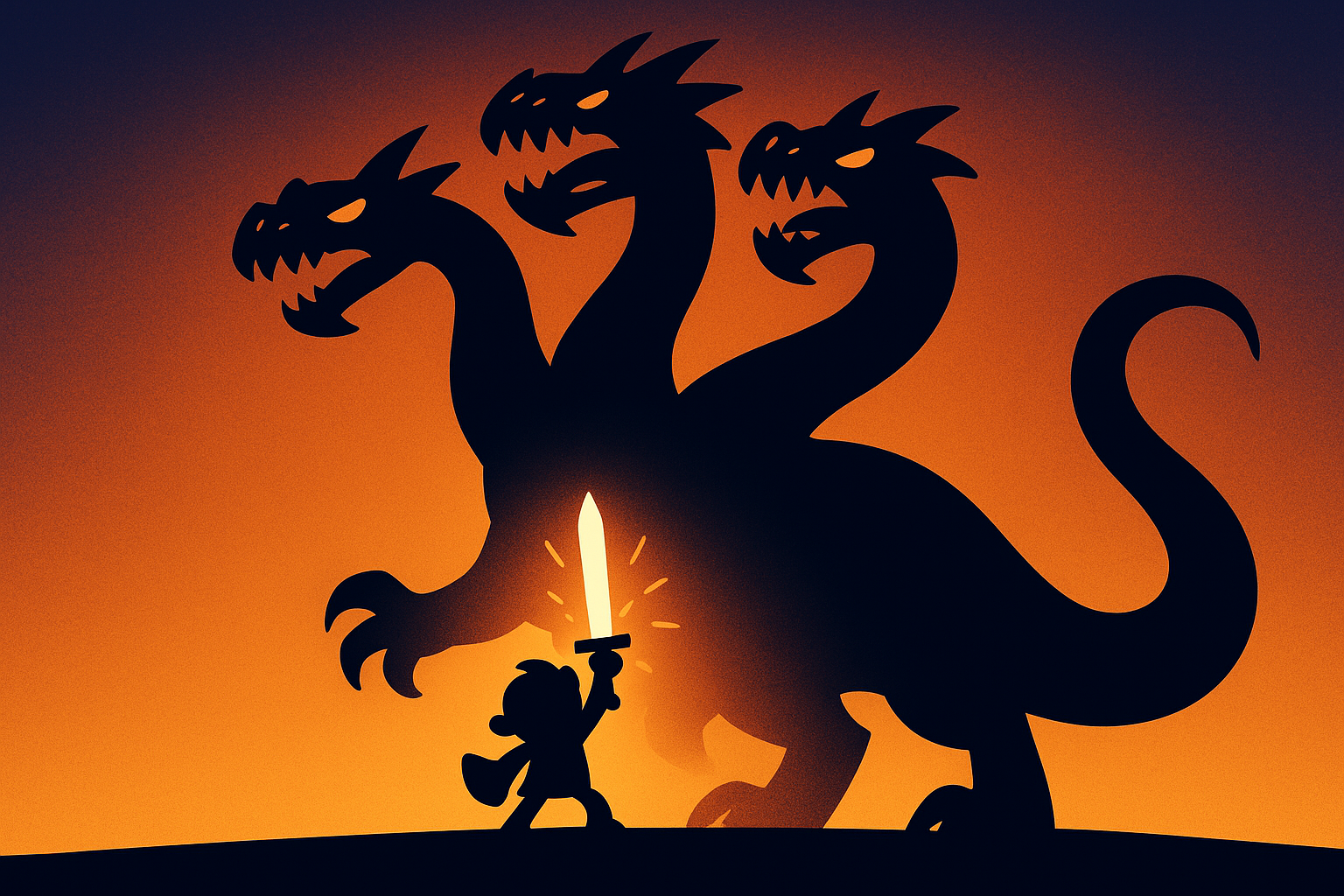
Open on the trial, not the backstory. The first 2-3 seconds decide whether someone keeps watching, and "long ago, in ancient Greece..." reads as a wind-up compared to opening mid-battle with Hercules already facing the Hydra. Save any necessary context for a quick aside once the hook has landed.
Let the stakes escalate in clear beats. A myth that jumps straight from "here's the challenge" to "here's the ending" skips the part audiences actually watch for. Each trial should raise the stakes past what felt survivable a moment before, the same structural beat that makes any Hero's Journey story satisfying regardless of which pantheon it comes from.
Close on the timeless truth, not just the plot outcome. Myths endure because they encode a lesson — hubris, sacrifice, the cost of power — and naming that lesson explicitly in the last line gives viewers something to comment about beyond "cool story."
How Do You Make Mythological Tales Videos with AI?
Researching an accurate myth, writing a script with real pacing, recording an appropriately epic voiceover, and syncing visuals and captions to the story takes 30-45 minutes per video by hand — a real bottleneck if you're covering multiple pantheons and trying to keep every detail accurate. An AI video generator collapses that into a single pass: you give it a tradition or a specific myth, and it writes the story, generates the voiceover, and builds captions and visuals automatically.
ShortOpus's Short Narration Standard format includes a dedicated Mythological Tales category built for exactly this. The workflow:
- Pick a tradition or describe your own idea. Choose Greek, Norse, Egyptian, or Asian mythology from the suggestions, or enter a custom premise if you want a specific myth, hero, or lesser-known tradition like Celtic or Mesopotamian.
- Review the script before rendering. The tool shows you the full script and generated voiceover text first, so you can fix a detail, tighten a weak beat, or adjust the pacing before any video is generated.
- Choose a voice and visual style. Pick an AI voice that fits the epic tone — commanding and grave reads differently than wondrous and light — and a visual template built for narration.
- Generate and export. The tool renders the full video with captions, pacing, and transitions built in, ready to post in 9:16 for TikTok, Reels, or Shorts.

Once you have a working format, the same pipeline applies to other faceless niches beyond mythology. Our comparison of AI faceless video generators covers how these tools stack up if you're producing across multiple formats.
What Common Mistakes Kill a Myth Retelling?
Sticking to only one pantheon. An account that only posts Greek mythology plateaus once it exhausts the handful of stories most viewers already know. Rotating between Greek, Norse, Egyptian, and Asian mythology, even within the same week, keeps the channel discoverable to audience segments who've seen the well-known myths retold elsewhere.
Explaining the moral too early. A myth that states its lesson in the first ten seconds gives away the exact payoff it needs to earn through the trials. Let the timeless truth land at the end, once the audience has actually watched the hero earn it.
Flattening the epic tone into a plain summary. A myth read like a Wikipedia plot summary loses the "larger-than-life" quality that makes it worth retelling in the first place. The voice matters as much as the facts — vivid action and a sense of weight and destiny are what separate a myth video from a history lecture.
No escalation between trials. A hero's journey with three trials of equal difficulty reads as repetitive rather than building. Each trial should raise the stakes past the one before it, so the final confrontation feels earned rather than arbitrary.
For the broader system of publishing consistently across a faceless account, see our faceless YouTube automation guide.
Frequently Asked Questions
What makes a good mythological tale for video content?
A good myth video opens on the trial itself rather than backstory, escalates the stakes across clear beats, and closes on the timeless truth the story leaves behind. Stories that follow the Hero's Journey structure — call to adventure, escalating trials, transformation — tend to outperform flat plot summaries, since that structure is what makes the pacing feel satisfying.
How long should a mythological tale video be?
For single-myth videos posted at volume, stay under 30 seconds with a cold open on the trial and one escalating beat. For a longer-form post meant to cover a full arc, run 2-3 minutes, since mythology specifically rewards a slower build across multiple trials more than most formats.
Do mythological tales videos still work in 2026?
Yes. Fantasy became Gen Z's #1 favorite on-screen genre in 2024, up 56% from the year before (UCLA Center for Scholars & Storytellers, 2024), and myths sit inside that same appetite for larger-than-life storytelling — with thousands of years of source material already proven to hold attention.
Can I make mythological tales videos without filming myself?
Yes, that's the core appeal of the format. Most successful mythology accounts use narrated voiceover with illustrated or AI-generated visuals rather than a face on camera. AI video generators like ShortOpus write the story, generate the voiceover, and build captions and visuals automatically.
Which mythological traditions work best for a new channel?
Greek, Norse, Egyptian, and Asian mythology each have a deep bench of well-known gods and heroes and don't require any visual-effects budget. For more on which faceless niches build into a sustainable channel, see our top faceless YouTube niches by earnings.
What to Do Next
Mythological tales videos work because the structure does the retention work for you — a hero facing escalating trials keeps people watching for the same reason it's kept audiences listening for thousands of years, without needing a face, a set, or a single visual effect. The traditions that perform are the ones with the deepest bench of recognizable characters: Greek, Norse, Egyptian, and Asian mythology.
Structure matters as much as the myth itself. Open on the trial, escalate the stakes in clear beats, and close on the timeless truth rather than just the plot outcome. Whether you post single myths daily or build toward a longer arc depends on whether you're optimizing for posting volume or total watch time.
An AI workflow removes the research and production bottleneck entirely — pick a tradition, review the script for accuracy and pacing, and export a ready-to-post video in minutes instead of the 30-45 minutes manual production takes per video.